Quick answer
A free 4K drone survey of every slope, valley, ridge and penetration, a hail-strike count per square after storms, and a written photo report within 24 hours. Backed by a hands-on check wherever the camera can’t answer the question.
Estimates by phone: (587) 804-9266 · Good Roofing · Calgary-owned since 2014 · 10-year workmanship warranty.
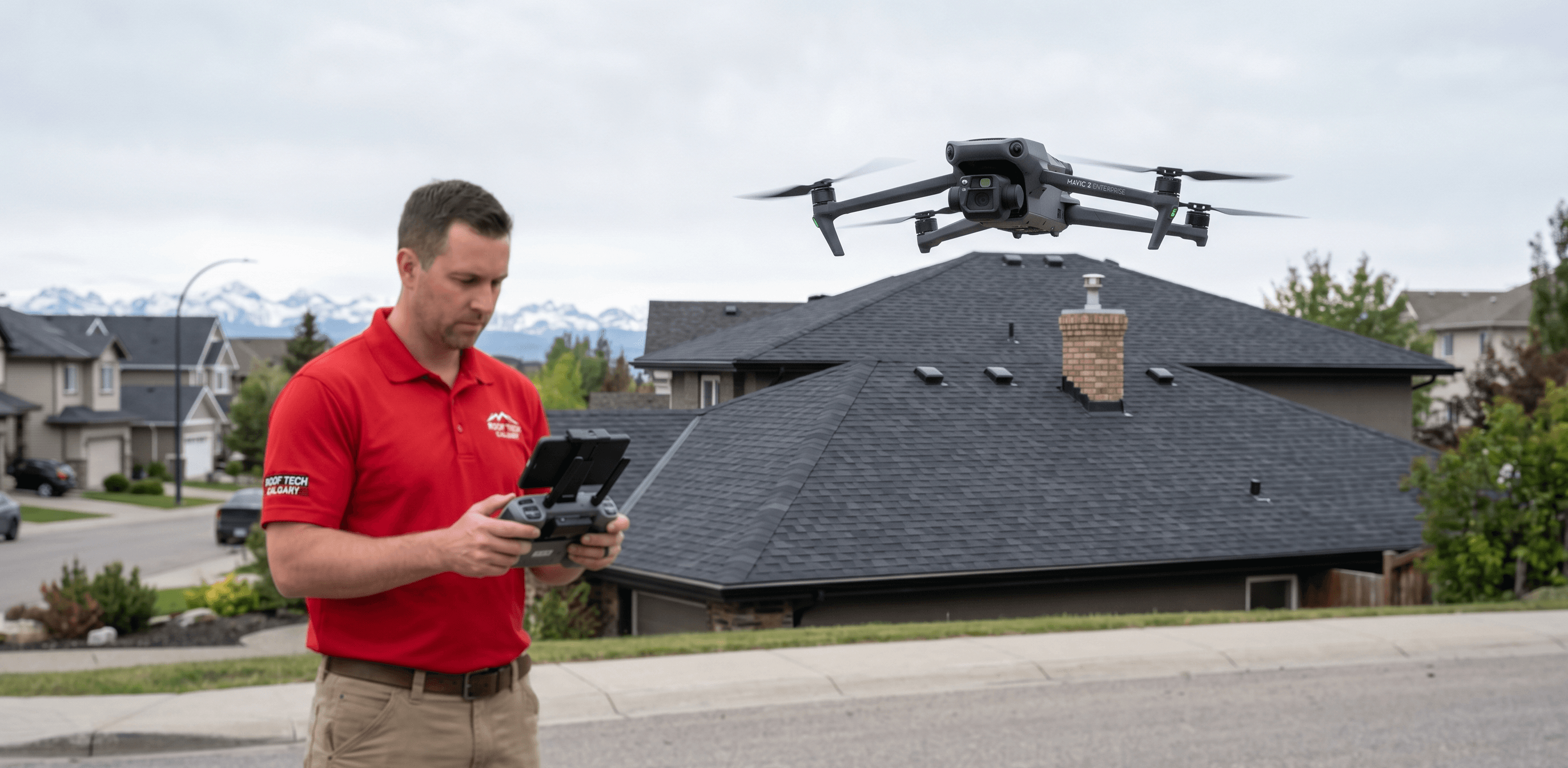
A drone roof inspection in Calgary takes about 15–25 minutes on site, photographs every slope in 4K without anyone climbing a ladder, and at Good Roofing it is free, with a written photo report delivered within 24 hours. A drone reliably spots missing and creased shingles, granule loss, hail strikes on shingles and soft metal vents, damaged flashing, and clogged or bent eavestroughs. It cannot feel a soft deck, test whether shingle tabs are still sealed, or see attic moisture, so a good inspection pairs the drone with a hands-on check where the photos raise questions. The Calgary pages ranking for this search sell the drone as the whole answer. This page explains where it works, where it doesn’t, which Transport Canada rules a Calgary roof flight falls under, and how drone photos hold up in a hail claim. Good Roofing has coordinated 2,800+ Calgary-region roofs since 2014 and holds 4.9★ from 237 verified reviews.
01 · Section
Quick answer — the 60-second version (citation-ready)
02 · Section
What a drone sees well on a Calgary roof
- 01Missing, creased or lifted shingles. Chinook gusts tear tabs along ridges and rakes first. The overhead view shows the pattern across the whole roof, which matters when deciding between a spot repair and a slope replacement.
- 02Granule loss and exposed mat. Dark patches where the protective granules are gone show up clearly in overhead shots, and they mark shingles that are ageing fast.
- 03Hail strikes. Fresh hits leave circular marks where granules were knocked off. The inspector counts strikes per square (100 sq ft) on each slope, the same unit insurance adjusters work in.
- 04Dented soft metals. Roof vents, ridge caps, flashing and eavestroughs dent easily, and those dents are some of the clearest evidence of a hail event on a Calgary roof.
- 05Flashing and penetrations. Lifted step flashing, cracked pipe boots, and gaps around chimneys and skylights are common leak sources and show plainly from above.
- 06Eavestrough and drainage problems. Sagging runs, granule build-up in gutters and blocked downspouts, all of which feed ice dams once winter arrives.
03 · Section
What a drone misses, and when someone still needs to get hands-on
- 01Soft or rotted decking. Sheathing damaged by ice dams or long-term leaks feels spongy underfoot but can look normal from above. It usually shows first along the eaves.
- 02Unsealed shingle tabs. A tab that has lost its adhesive bond can lie flat in a photo and still lift in the next windstorm. Checking the seal means lifting the tab by hand.
- 03Hail bruising on shingles. A bruise is a soft spot in the mat that you feel more than see. Adjusters in Calgary commonly confirm hail damage by hand inside a marked test square on each slope.
- 04Nailing problems. Nails driven too high, too few per shingle or overdriven are hidden under the course above. They matter on a roof that keeps shedding shingles.
- 05Attic moisture and ventilation. Frost on nail tips, wet insulation and blocked soffit vents are attic problems. If you grant attic access, the inspector checks there too. Our attic ventilation page explains why it matters for ice dams.
- 06Moisture inside a flat roof. Water trapped under a membrane is invisible to a standard camera. Thermal imaging can help on low-slope roofs, but it needs the right conditions, usually a clear evening after a sunny day, and a trained operator to read it.
04 · Section
Drone rules in Calgary: what to ask before anyone flies over your house
05 · Section
Drone inspections and Calgary hail claims
06 · Section