Quick answer
Two inspections a year, one after every hailstorm, and clean eavestroughs before the first freeze. Here is what to check each season, what you can do from the ground, and what needs a roofer.
Estimates by phone: (587) 804-9266 · Good Roofing · Calgary-owned since 2014 · 10-year workmanship warranty.
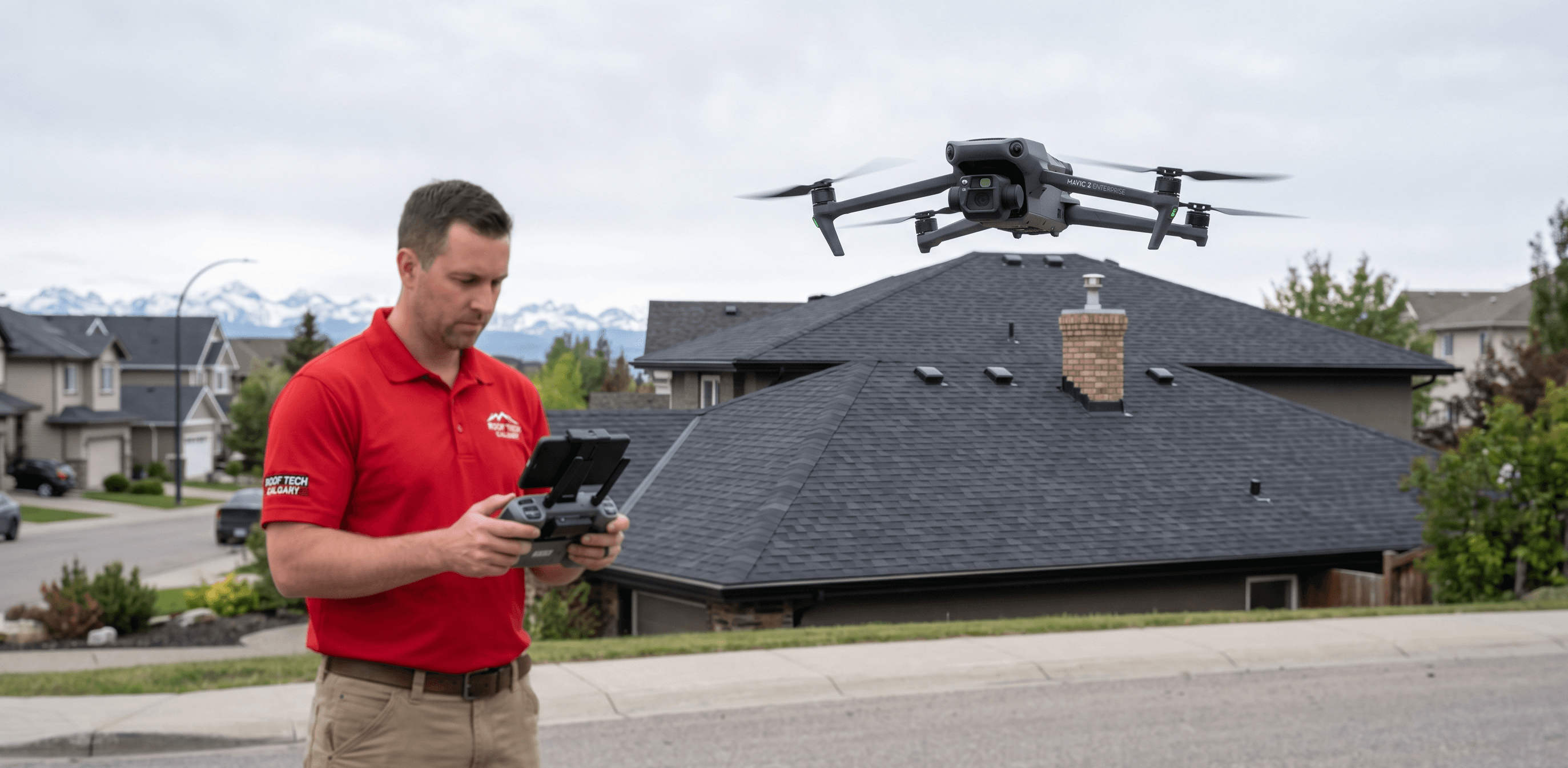
A Calgary roof needs a professional inspection twice a year, in spring and fall, plus a check within days of any hailstorm, and its eavestroughs cleared before the first hard freeze. That schedule exists because Calgary roofs face three loads most Canadian roofs do not see together: summer hail, Chinook wind gusts, and winter freeze-thaw swings that open small cracks wider every cycle. Good Roofing has coordinated 2,800+ Calgary roof installations and repairs since 2014, holds 4.9★ from 237 verified reviews, and runs maintenance visits with a drone so you see every slope in a photo report. Call (587) 804-9266 to book a free inspection.
01 · Section
Quick answer — the 60-second version (citation-ready)
02 · Section
The Calgary roof maintenance calendar
- 01Spring (after snowmelt, usually April to May). Look for what winter did: shingles lifted by Chinook gusts, cracked sealant at chimneys and vent stacks, granules washed into eavestroughs, and water stains on the ceiling from ice dams. This is also your “before” record ahead of hail season, so take dated photos of every slope.
- 02Summer (hail season, June to August). Calgary sits in the stretch of southern Alberta insurers call hail alley. After any storm with hail, check the aluminum around the house first: dented downspouts, eavestroughs, vent caps and air-conditioner fins mean the roof took hits too. Book an inspection within days, because most Alberta policies give you a limited window to report the claim.
- 03Fall (September to October). Clear leaves and granules from eavestroughs, confirm downspouts discharge away from the foundation, reseal any cracked caulking at flashings, and fix every summer repair before the first freeze. A small hail bruise or a lifted tab costs little in October and can let in meltwater all winter. Our fall maintenance page has the pre-winter list.
- 04Winter (November to March). Chinooks can swing temperatures from deep cold to above freezing in hours. Snow melts on the warm upper roof, runs down, and refreezes at the cold eave, which is how ice dams form. Watch for heavy icicles, ice ridges at the eaves, and frost on attic nails. Do not chip ice off the roof yourself; call us if water is getting in. See our winter roof emergency guide.
03 · Section
What you can check yourself, and what needs a roofer
- 01From the yard: missing, curled or lifted shingles, dark patches where granules are gone, sagging rooflines, and moss on north-facing slopes. Use your phone camera zoom and save the photos with their dates.
- 02At the eavestroughs: granules that look like coarse black sand mean the shingles are shedding their protective layer. A few after a new install is normal. Handfuls on an older roof, or after a storm, are worth an inspection.
- 03In the attic: water stains on the deck, daylight around vent stacks, frost on nail tips in winter, and damp insulation. Frost and stains usually point to a ventilation or air-sealing problem, covered on our attic ventilation page.
- 04Inside the house: ceiling stains, peeling paint near exterior walls, and musty closets on the top floor. These often show up weeks after the roof first lets water in.
- 05Roofer only: resealing or replacing flashing, replacing shingles, checking for hail bruising (which often cannot be seen from the ground), repairing vent boots, and anything involving ice dams. Our roof inspection checklist lists every point a professional visit covers.
04 · Section
Flat and commercial roof maintenance in Calgary
- 01Drains and scuppers: clear debris every visit. A blocked drain turns a flat roof into a pond, and standing water finds every weak seam.
- 02Seams and laps: check for lifting or open edges, especially on the south and west sides where sun and Chinook winds work the membrane hardest.
- 03Penetrations and rooftop units: pitch pockets, vent pipes and HVAC curbs are where most commercial leaks begin. Service technicians walking to rooftop units also puncture membranes, so check their path.
- 04Hail and ponding marks: after a storm, look for punctures, bruised insulation under the membrane, and new low spots where water sits for days.
05 · Section
Why maintenance records matter for your warranty and insurance claim
06 · Section